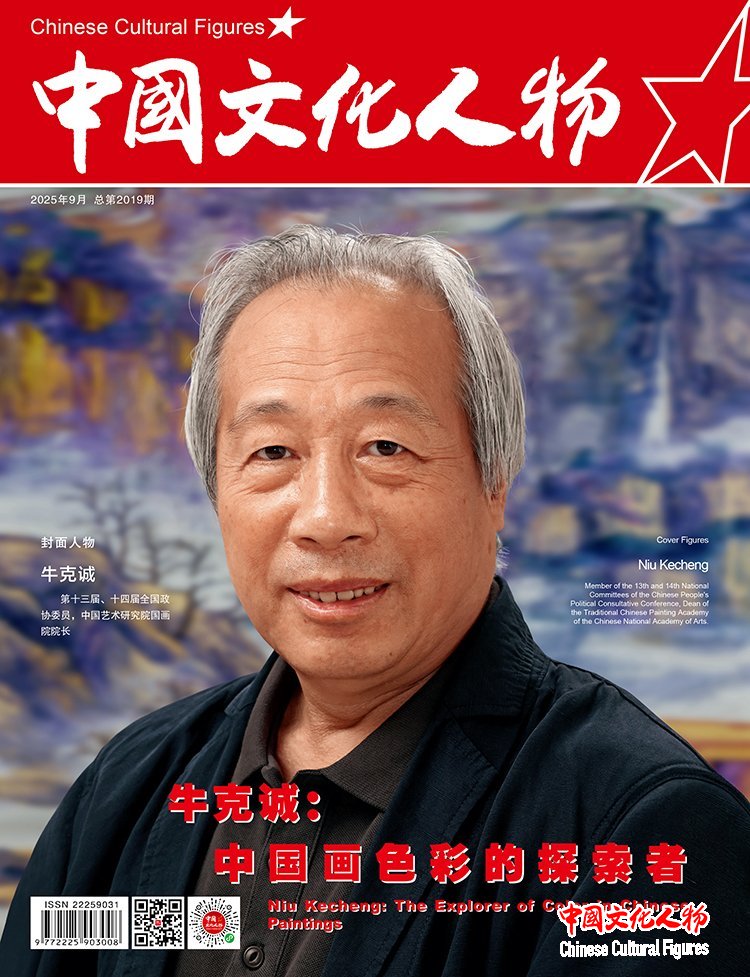
牛克诚,第十三届、十四届全国政协委员,中国艺术研究院国画院院长
Cover Figures:Niu Kecheng Member of the 13th and 14th National Committees of the Chinese People's Political Consultative Conference, Dean of the Traditional Chinese Painting Academy of the Chinese National Academy of Arts.
中国文化人物主编 王保胜/摄影报道
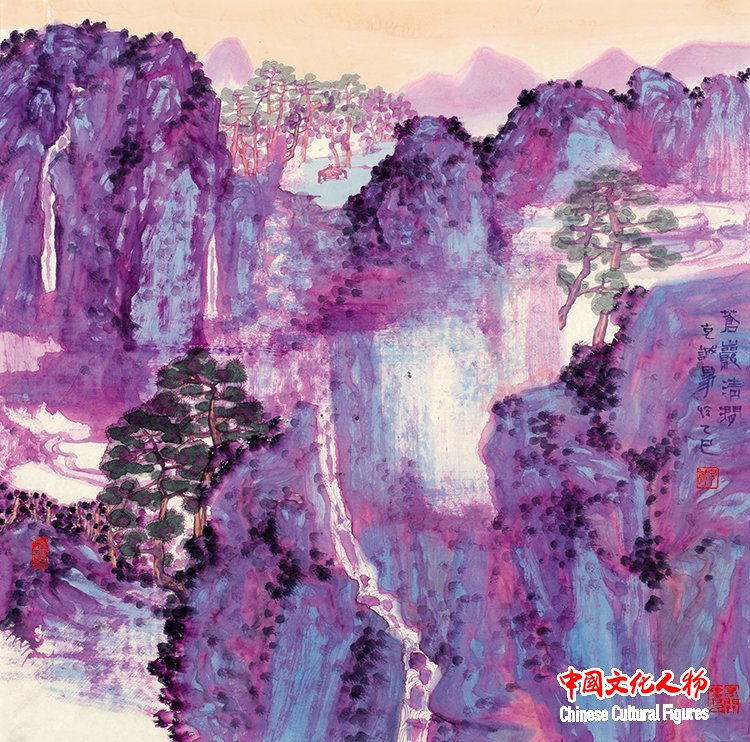
苍岩清涧 68×68cm 牛克诚作品
“Clear Gorges and Fresh Streams” (68×68cm) by Niu Kecheng
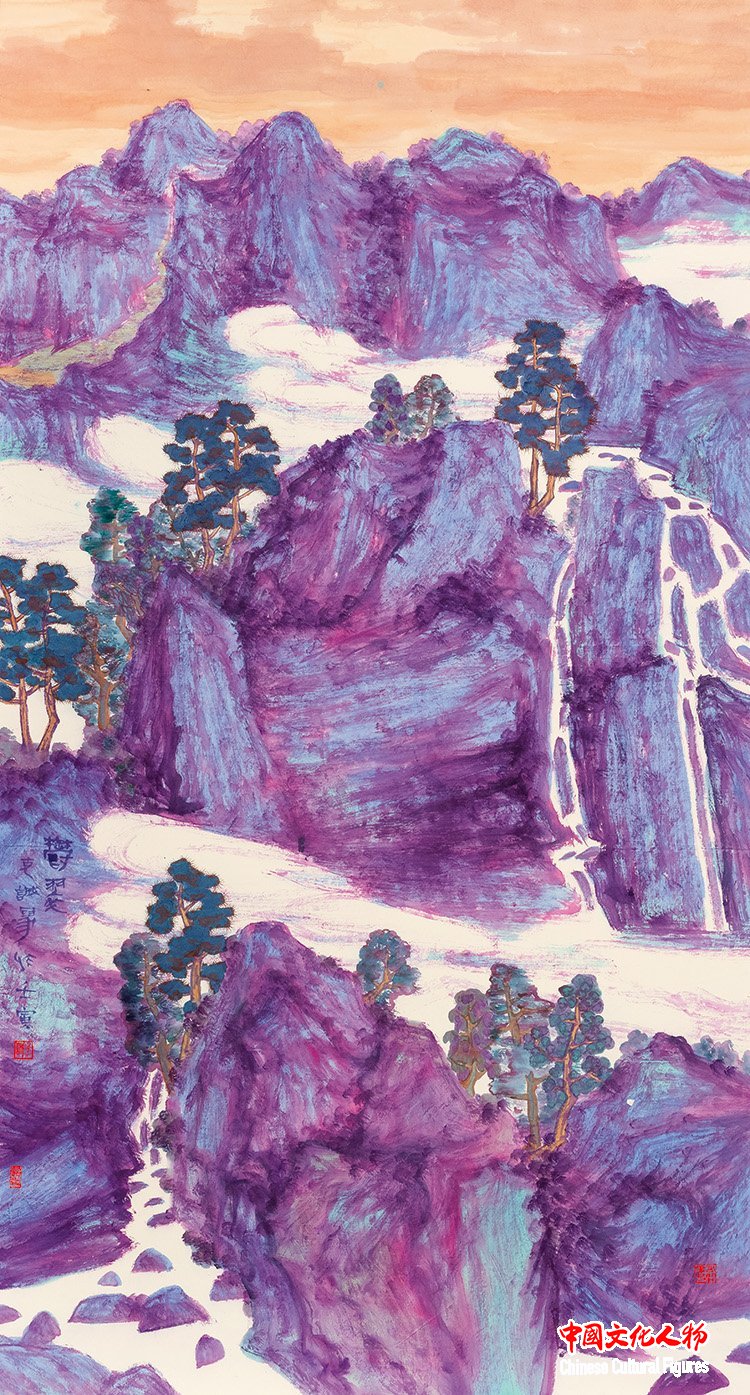
郁翠 180×97cm 2022 牛克诚作品
“Lush Greenery” (180×97cm) by Niu Kecheng in 2022
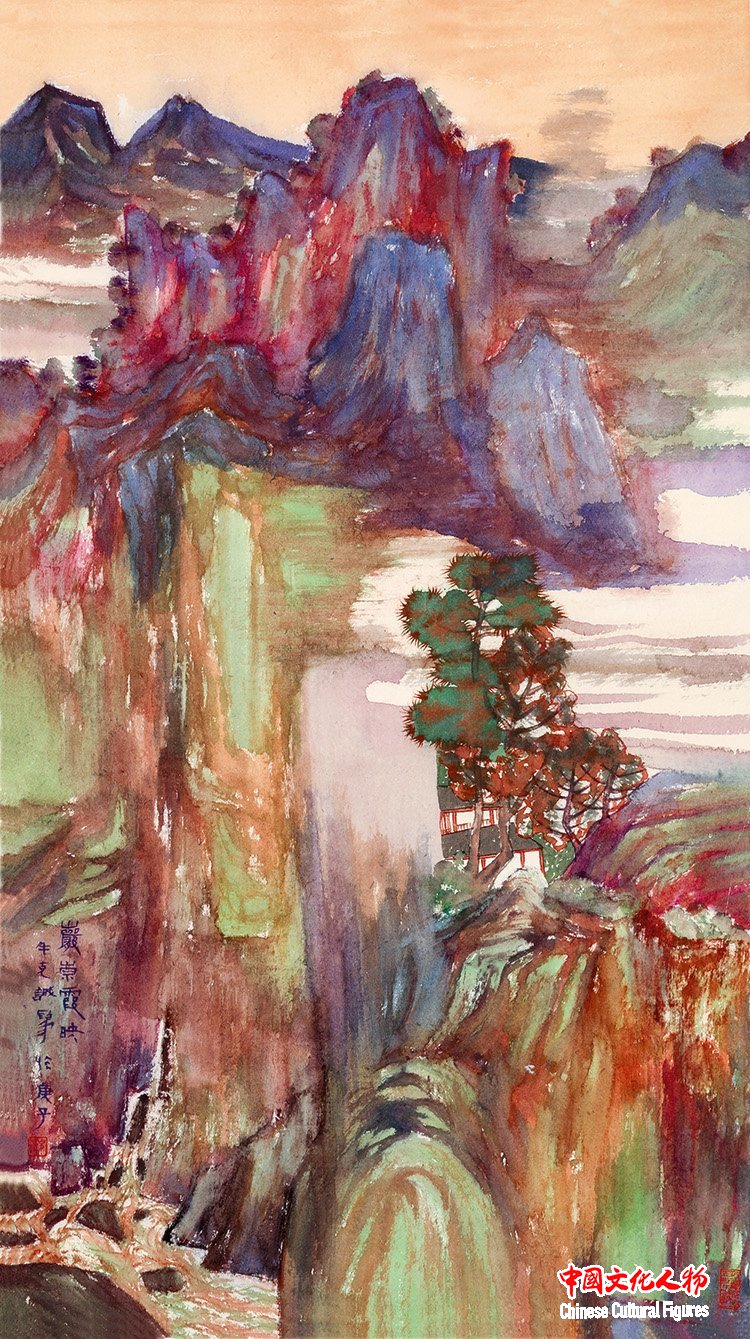
岩崇霞映 98×53cm 2020 牛克诚作品
“The Lofty Cliffs Glow in the Rosy Clouds” (98×53cm) by Niu Kecheng in 2020
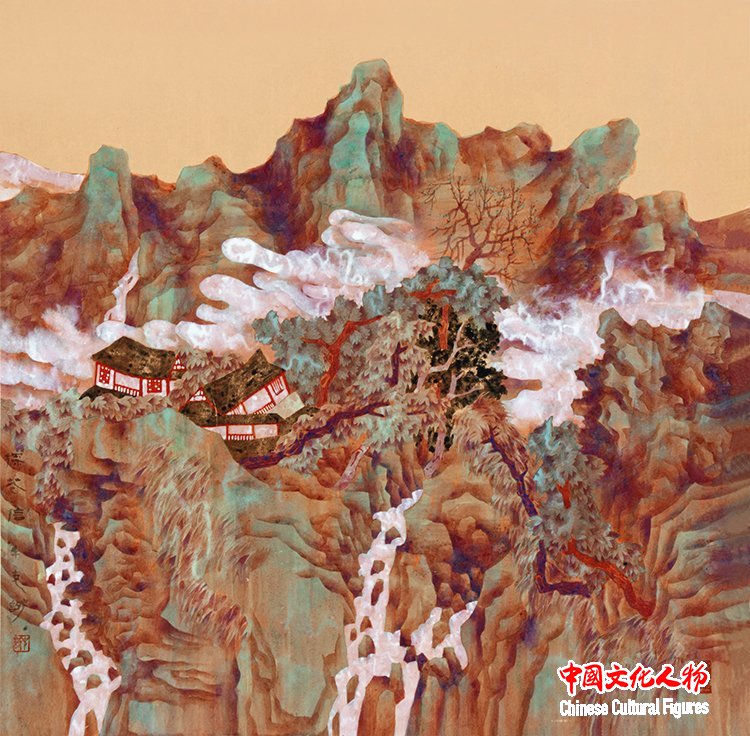
探花信 66×66cm 2012 牛克诚作品
“Letter Inquiring About News of Flowers” (66×66cm) by Niu Kecheng in 2012
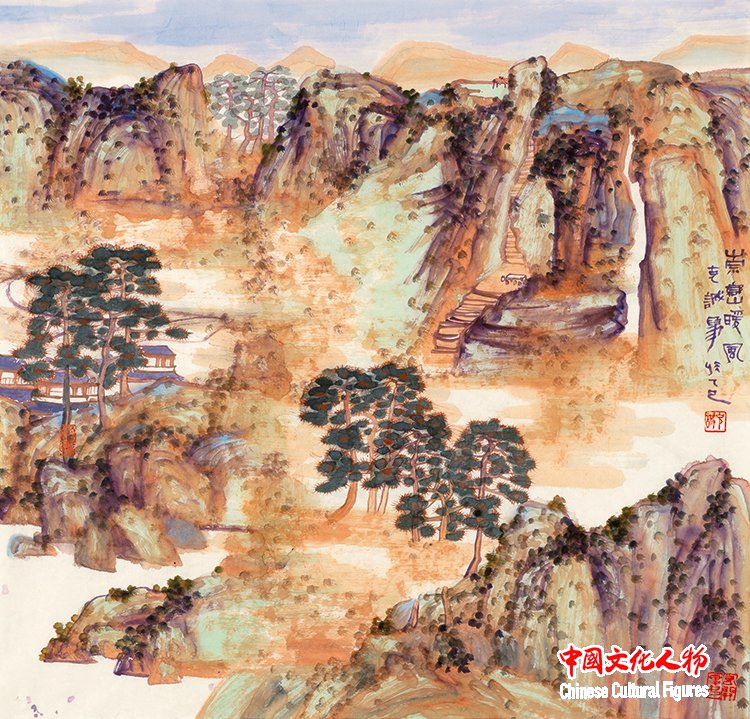
重峦暖风 68×68cm 牛克诚作品
“Warm Breeze Among Layered Mountains” (68×68cm) by Niu Kecheng
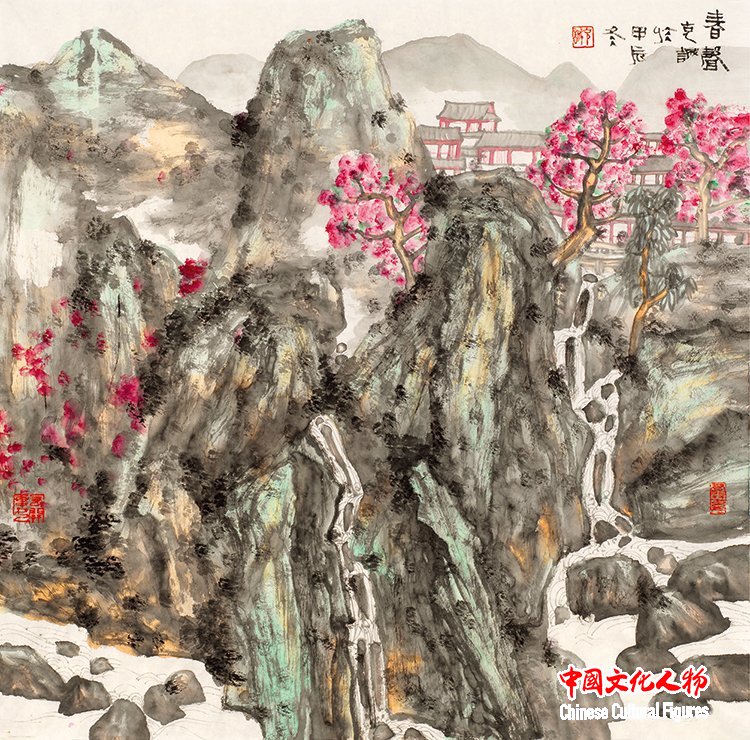
春声 68×68cm 牛克诚作品
“Spring Sounds” (68×68cm) by Niu Kecheng
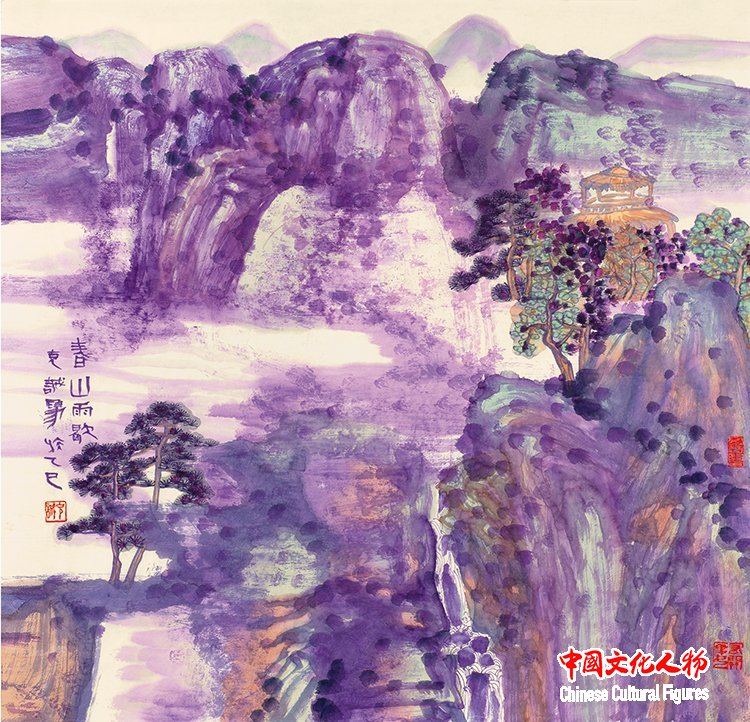
春山雨歇 68×68cm 牛克诚作品
“The Spring Mountains After the Rain Stops” (68×68cm) by Niu Kecheng
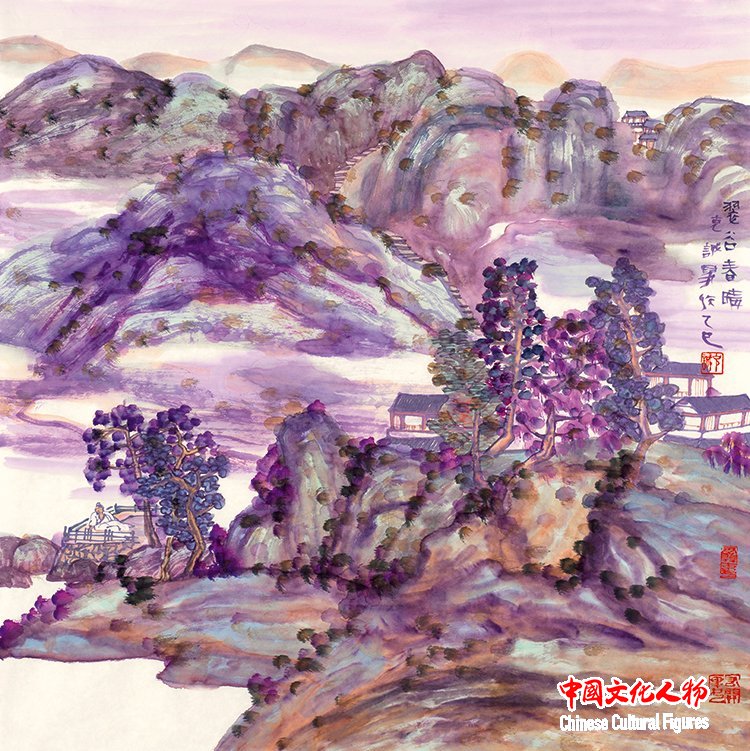
翠谷春晴 68×68cm 牛克诚作品
“The Green Valley on a Clear Spring Day” (68×68cm) by Niu Kecheng
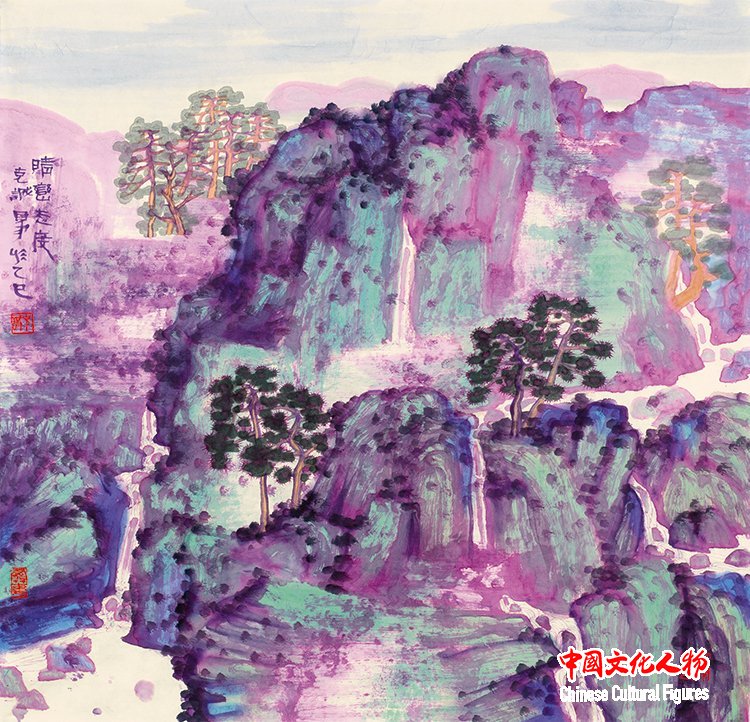
晴峦态度 68×68cm 牛克诚作品
“The Demeanor of Sunny Hills” (68×68cm) by Niu Kecheng
中国文化人物(主编 王保胜)当代著名学者牛克诚长期以来以“色彩”为中心进行学术主体建设,其展开的领域包括艺术史研究、艺术创作及美术活动。在艺术史研究方面,他以“色彩”为视角重新观照古代绘画,其学术专著《色彩的中国绘画》展开了与“水墨”不同的另一部中国绘画史;在美术活动方面,他发起并主持的“中国传统色彩学术年会”已连续九年举办,成为探究中国传统色彩经验与智慧的重要学术平台;在艺术创作方面,他倾力探索传统青绿山水现代转型的多种可能,其集中体现为源于晋唐青绿山水的工笔重彩、文人笔墨与重彩融合的彩墨,以及以色彩阐释笔墨精蕴的意笔重彩,它们以出古入新的语言风貌,在当今画坛独树一帜。
一
牛克诚的力作《色彩的中国绘画》研究了中国绘画中的色彩课题,以此打开了人们对中国绘画色彩理解的遮蔽。该著作对中国古代绘画色彩观念与运用的钩沉,既让人们对中国绘画色彩的演变有了清晰的认知,也在很大程度上力图矫正人们对以“水墨为上”作为中国画学主流的某种误读。对于这样一个从临摹古画局部而加深对中国画学色彩研究的学者来说,牛克诚的研究不会止于研究文本的表述,研究所形成的对中国画的色彩认知,不断促使他通过实践来探索中国画的色彩命题。
牛克诚的工笔山水充分体现了他对中国画色彩的认知与探索。首先是有关色彩的明度处理。他对古代青绿山水画的感悟,让他更多地强调间色在青绿之中的调和作用。甚至他的青绿给人深刻印象的不是浓厚的石绿(他几乎绝去石青),而是在仿古宣深暖色底子上以大面积赤赭色系画出的山石,石绿只是这赤赭色系的某些罩染和提亮。显然,他的工笔青绿山水从古代青绿变出,而完全改变了石绿的色彩明度,是以赤赭色系为铺垫的局部石绿的分染。
值得强调的是,牛克诚在此改写了中国传统相对纯粹的石绿用法,而创造性地凸显了赤赭色系在画面中的比例。这其实也是部分吸取了西画之中有关冷暖色、互补色在画面中均衡使用的画学理念。也即克诚兄在降低石绿明度的同时,更多地使色彩运用转向了间色之中冷暖、互补的色彩关系调整。石绿是冷色,相搭配的赤赭则是暖色。他画面上的一些树干、房舍的窗梁等不惜用橙红,甚至山石深处在赤赭之中染以紫色,由此构成绿、橙、紫的色彩关系。其实,绿、橙、紫恰恰是在三原色基础上形成的间色(复色)。可见克诚兄对间色的运用是极其自觉的一种完型搭配。在工笔山水画的色彩运用上,还没有人如此完整地表达这种色彩理念。
二
对牛克诚工笔山水画而言,尽管他在草稿过程中可能是以墨线或赭线勾、皴、滴、泼、染并用,但就他画面整体而言,却是力尽去墨色化(也许只是色彩之中渗以少量墨色),也即消解了重墨勾廓,或墨色皴擦阴面的一般青绿图式。有关山石,他基本以赤赭加石绿来解决,以求色彩的纯粹性,这个方法后来被他其沿用到彩墨山水的创作中。而“黑、白”在中国画上又是不可缺少的必要色彩元素,因而,“墨”被他限制在画面上某棵树的叶片处理上,这棵树由此成为调整画面色彩重量的中心点。
牛克诚工笔山水画除了对中国传统色彩的创新性拓展,他在山石造型与画面整体结构方面也进行了崭新的探索。这就是整体的平面性与局部立体性的结合。他的构图改变了传统山水画三段式的空间布局,而像长焦距镜头拍出的风景。也即重峦被叠置在一个平面上,仿佛把“深远”和“平远”的空间都压缩掉了,由此形成画面上下左右平摊叠置的均衡形式。这一方面来自他泼铺赤赭底色时的整体化处理,另一方面也体现了现代构成性的视觉经验。
应当说,勾与染也对应了中国画的笔墨与色彩。在此方面,牛克诚对传统山水画也进行了较多的改写。从整体看,他相对减弱了勾廓在山石造型中的作用,他在起稿中生成的草勾不仅为画面奠定了整体的构思与构图,而且许多草勾的线也成为埋在那些赤赭与石绿之中的勾骨,从而起到色彩的支撑作用。他的染从来不是机械性的平涂均染,而是带着笔意地甚至是书写性地以“写”带“涂”,这个过程用“写彩”的概念或许更精准。也因是“写彩”,他的每次积彩或分染,都务必留出不同的空隙,由此而形成不同变化的色层叠加。就像赤赭色系绝不是调好颜色一层层复染那样,那些占据了画面主调的色彩只能是橙色、赭石等不同区块的层染,并因此而形成微妙、丰富的色彩变化,石绿的透明与不透明也形成了透露赤赭底子的色相变化。也因他的底稿是通过泼滴撞色所形成,这使他的写彩更具有某种不确定的灵变性,从而体现了他将写意与工笔相结合相统一的探索。
三
在彩墨山水的道路上,牛克诚试图改变以墨色为主的画面,让色彩成为写意山水的统领。他最近数年创作的《夏山拥苍翠》《夏云绮丽》《暗香度》《粲景》《丽崎》和《绣帷》等作品,一改中国水墨山水以秋冬之景入画的传统,以描写盛夏茂密的植被为主景而力图表现色彩的绮丽与奇幻。这些画作都最大限度地减少了水墨勾皴,代之的则是水色勾皴,墨或许只是被少许地融渗到那些水色之中。当然,他从工笔山水画中得到的色彩经验也被巧妙地转用于他的这些彩墨山水的探索。譬如,他仍然以绿、紫、橙为画面主体色彩,体现了间色的完整性;譬如,他不是单独地施用某一种色彩,而大多以两到三种以上的色彩予以错置、叠合而使色彩显得更加鲜透和丰富;譬如,以皴、擦、撞、破、写的方式形成画面新的笔彩关系,其追求的就是改“笔墨”为“笔彩”,让中国画在传统色彩基础上进行真正意义上的写意与色彩的拓展。
尚辉(中国美协美术理论委员会主任、《美术》杂志社社长兼主编)(原文有删减)
牛克诚
1961年生于辽宁抚顺,毕业于北京大学及中国社会科学院研究生院历史系。
第十三届、十四届全国政协委员,中国美术家协会理事、中国美术家协会理论委员会副主任、中国艺术研究院国画院院长、《美术观察》主编、中国艺术研究院学术委员会副主任、全国政协书画室副主任、国务院学位委员会美术学科组委员。
绘画作品入展国家级重要美术展,学术专著获国家新闻出版总署颁发的国家图书奖等。在中国美术馆、日本东京艾斯派尔画廊等举办个人画展。
Chinese Cultural Figures (Chief Editor: Wang Baosheng) Renowned contemporary scholar Niu Kecheng has long focused his academic pursuits on the topic of “color,” conducting research in the fields of art history, artistic creation, and fine arts. In art history, he has reexamined ancient paintings through the lens of color. His academic monograph, Color in Chinese Painting, presents a unique history of Chinese painting that differs from the history of ink. Regarding fine arts activities, he initiated and chaired the “Chinese Traditional Color Academic Annual Conference,” which has been held for nine consecutive years and has become a crucial academic platform for exploring traditional Chinese color experience and wisdom. In artistic creation, he devoted himself to exploring various possibilities for the modern transformation of traditional blue-green landscape painting. These efforts are epitomized by three approaches: meticulous brushwork with heavy colors derived from Jin-Tang blue-green landscapes, the fusion of literati ink and heavy colors, and an expressive, heavy-color technique that interprets the essence of brushwork through color. With their innovative language style that bridges tradition and innovation, these works have carved out a unique niche in today’s art world.
I
In his seminal work, Color in Chinese Painting, Niu Kecheng explores the color themes in Chinese painting, thereby unveiling the misunderstandings surrounding the interpretation of color in Chinese painting. By excavating ancient Chinese painting’s color concepts and their application, the book provides a clear understanding of the evolution of color in Chinese painting. It also attempts to correct the misinterpretation that prioritizes “ink wash supremacy” as the mainstream of Chinese painting studies. As a scholar who studies Chinese painting by copying fragments of ancient paintings, Niu Kecheng’s work goes beyond textual analysis. His cognitive framework about the colors in Chinese paintings continuously drives him to explore their color propositions through practical experimentation.
Niu Kecheng’s meticulous landscape paintings demonstrate his profound understanding of and exploration into the use of color in Chinese painting. First is his handling of color brightness. His study of ancient blue-green landscape paintings inspired him to highlight the harmonizing role of intermediate colors within this palette. Viewers are most impressed by the mountains and rocks in his blue-green works, which are painted with large areas of crimson-ochre tones on warm-toned antique xuan paper. Azurite merely serves as shading and brightening elements within this crimson-ochre system, as Niu Kecheng almost completely abandoned its use. Clearly, his meticulous blue-green landscapes evolved from ancient blue-green techniques while completely altering the chromatic brightness of azurite. He accomplishes this by employing partial azurite shading through crimson-ochre tones as a foundation. Notably, Niu Kecheng reimagines the traditional use of azurite in Chinese painting, creatively emphasizing the proportion of crimson-ochre tones in his compositions. This partially incorporates Western painting concepts regarding balanced warm and cool color usage in compositions. In other words, while reducing the brightness of azurite, Brother Kecheng adjusts color applications to create balanced warm/cool and complementary color relationships within intermediate hues. Since azurite is a cool color, its paired crimson-ochre counterpart becomes warm. In his paintings, some tree trunks and window beams boldly employ orange-red, even dyeing deep mountain rocks with purple within crimson-ochre tones, thus forming green, orange, and purple color relationships. In fact, green, orange, and purple are precisely intermediate colors (complementary colors) derived from the three primary colors. This demonstrates Brother Kecheng’s highly conscious application of intermediate hues as a complete chromatic combination. No one has yet expressed such a comprehensive color philosophy in the chromatic usage of meticulous landscape painting.
II
In his meticulous landscape paintings, Niu Kecheng employs ink lines, ochre strokes, and texturing, dripping, splashing, and staining techniques in his draft works. However, the final compositions typically feature minimal ink application and subtle color accents. This approach dismantles traditional blue-green painting conventions, in which heavy ink outlines define contours and dark tones dominate shaded areas. He predominantly uses vermilion and stone-green pigments for rock formations to achieve chromatic purity, a technique he later adapted for his colored-ink landscapes. In Chinese art, “black and white” remain essential color elements. By applying ink only to individual leaves on trees, Niu transforms them into focal points that balance the composition’s visual weight.
In addition to expanding traditional Chinese color palettes in innovative ways, Niu Kecheng’s meticulous landscape paintings explore new approaches to rock formations and overall composition. This represents the integration of holistic planarity with localized three-dimensionality. His compositions transform the traditional tripartite spatial arrangement of landscape paintings into a perspective similar to that of a long-focus lens capturing scenery. The overlapping layered peaks on a single plane compress the spatial dimensions of “profound depth” and “flat distance,” creating a balanced composition in which elements are evenly distributed across the entire canvas. This effect stems from his holistic approach to applying crimson ochre base colors and reflects a modern visual experience.
It should be noted that the techniques of outlining and shading correspond to brushwork and color in Chinese painting. In this regard, Niu Kecheng has reinterpreted traditional landscape painting significantly. He has diminished the role of contouring in shaping rocks and mountains. The rough outlines created during the initial sketch not only establish the composition, but also serve as skeletal structures within the ochre-red and stone-green hues, supporting the color scheme. His shading is never a mechanical application of even pigments; rather, it is an expressive brushstroke that integrates “writing” with “painting” —a process more accurately described as “color writing.” This approach ensures distinct gaps between each layer of accumulated or divided shading, creating varied chromatic layers. Just as ochre-red tones are never simply layered by mixing them, the dominant colors emerge through layered shading of orange and ochre blocks, resulting in subtle yet rich color variations. The transparency and opacity of stone-green also reveal tonal shifts against the ochre-red base. Since his sketches are formed through splashing and color collisions, this method imbues his color writing with an element of unpredictable spontaneity, demonstrating his exploration of harmonizing freehand brushwork with meticulous detailing.
III
In his color-ink landscape paintings, Niu Kecheng transforms ink-dominated compositions by making color the dominant element in freehand landscape art. Departing from the traditional Chinese ink landscape practice of depicting autumn and winter scenes, his recent works, such as Summer Mountains Embracing Verdure, Summer Clouds in Splendor, Faint Fragrance, Radiant Scenery, Lizhi, and Embroidered Curtain, showcase lush summer vegetation. Instead, they focus on portraying lush summer vegetation to showcase the splendor and fantasy of colors. These paintings minimize ink outlines and texturing techniques, replacing them with watercolor-based strokes where ink is subtly blended into the watercolors. Of course, the color experience he gained from meticulous landscape painting has been ingeniously applied to his explorations of color-ink landscapes. For instance, he still uses green, purple, and orange as primary colors to maintain chromatic integrity; he employs multiple colors—typically two or more—through overlapping and layering to create vibrant and rich hues; and he forms new brushwork relationships through texturing, rubbing, colliding, breaking, and writing techniques. This pursuit aims to transform “brush and ink” into “brush and color”, enabling Chinese painting to achieve true freehand expression and chromatic expansion based on traditional color foundations.
Shang Hui (Director of the Art Theory Committee of China Artists Association, President and Editor-in-Chief of Fine Arts Magazine) (The original text has been abridged)
Niu Kecheng
He was born in Fushun, Liaoning Province, in 1961 and graduated from Peking University and the Graduate School of History at the Chinese Academy of Social Sciences.
He is Member of the 13th and 14th National Committee of the Chinese People’s Political Consultative Conference (CPPCC), Director of the China Artists Association, Deputy Director of the Theory Committee of the China Artists Association, Dean of the Traditional Chinese Painting Academy of the China National Academy of Arts, Chief Editor of Art Observation, Deputy Director of the Academic Committee of the China National Academy of Arts, Deputy Director of the Calligraphy and Painting Office of the National Committee of the CPPCC, and Member of the Fine Arts Discipline Group of the Academic Degrees Committee of the State Council.
His paintings have been exhibited in nationally important art exhibitions, and his academic monographs have won the National Book Award, which is presented by the General Administration of Press and Publication. He has held solo exhibitions at the China Art Museum, Tokyo Esper Gallery, Japan, etc.
 文化大家
文化大家










 京公网安备11010802046836号