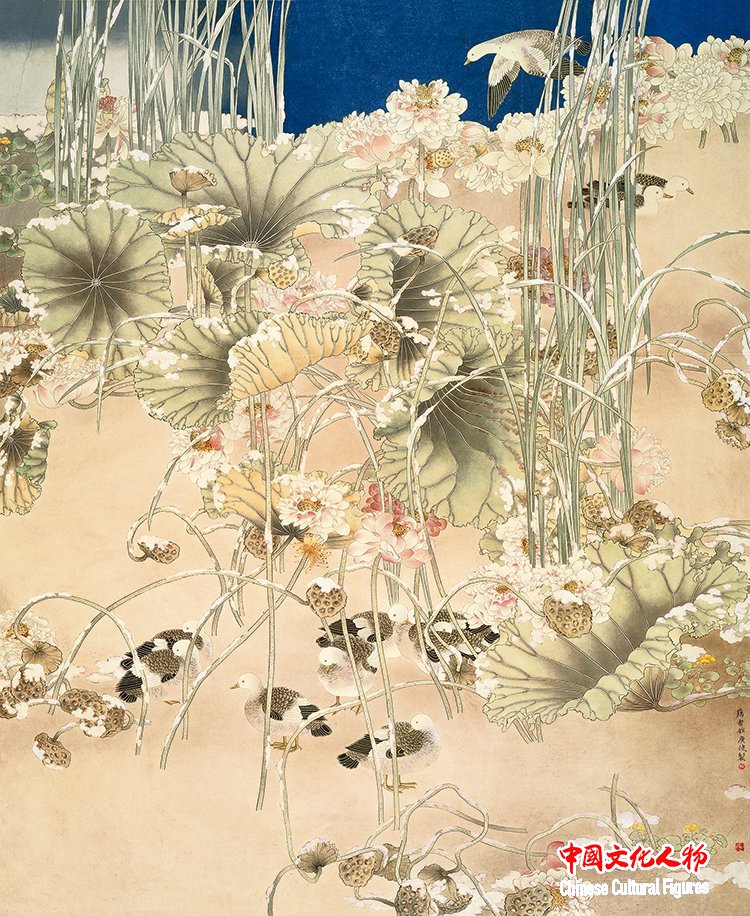
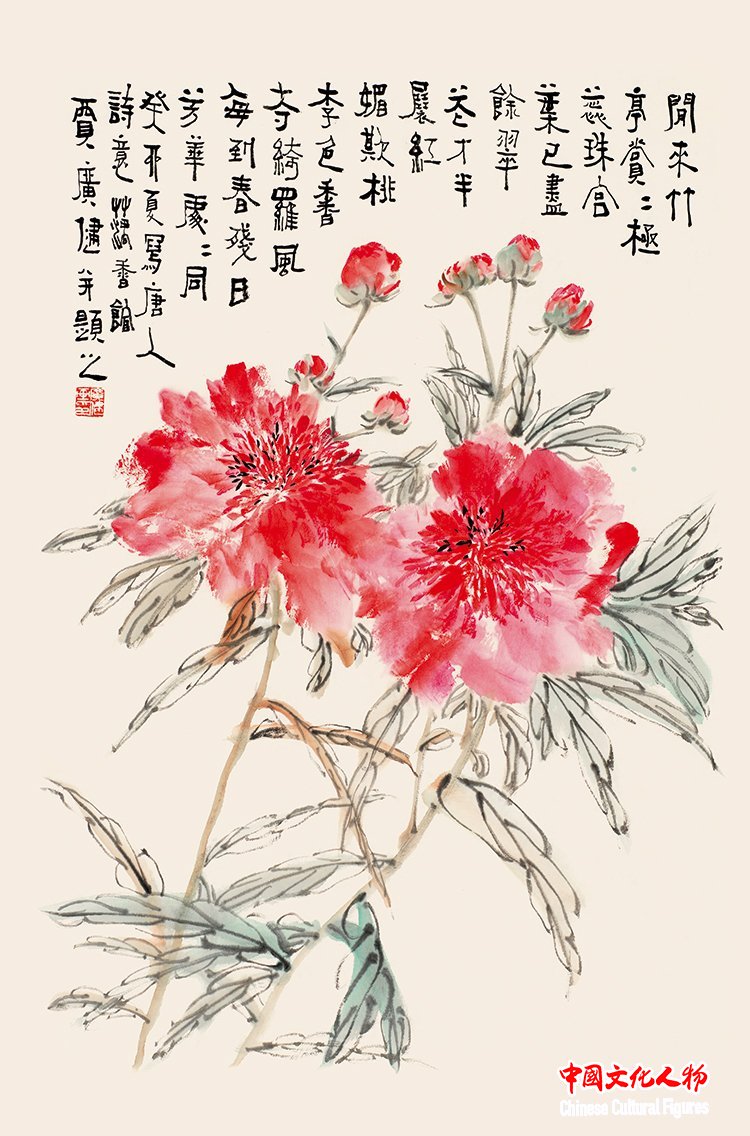
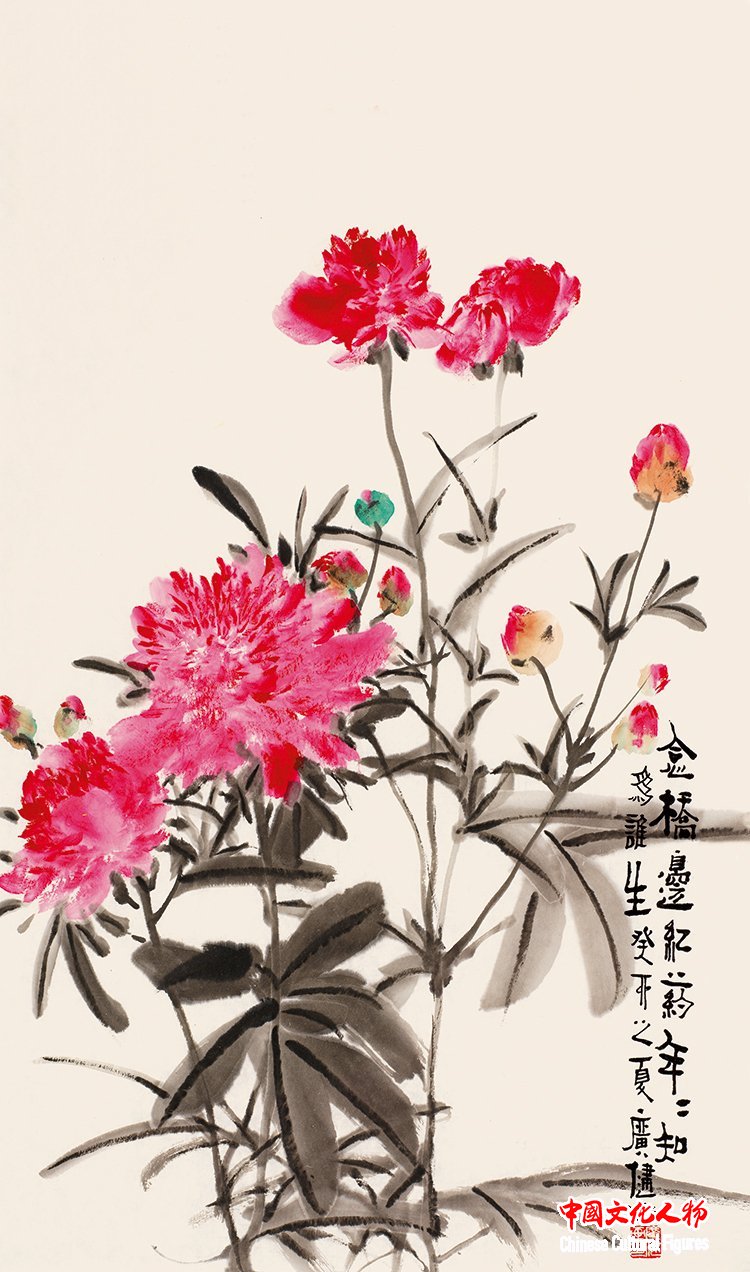
“The Red Peonies Bloom Year After Year” (45×68cm) by Jia Guangjian
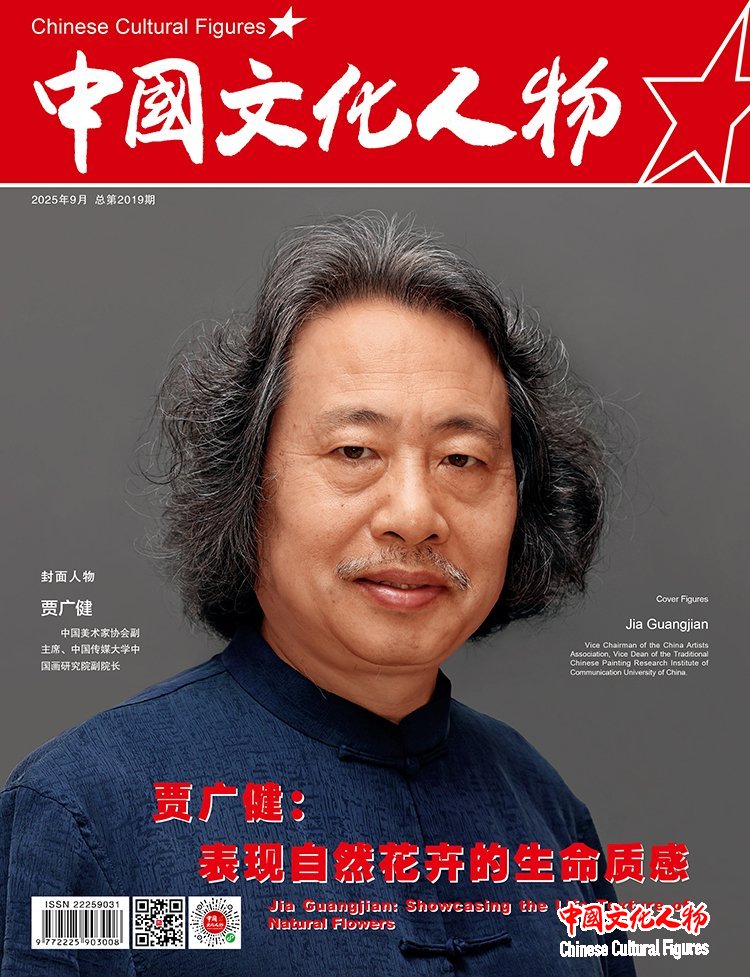
中国文化人物(主编 王保胜)贾广健是当代花鸟画坛中一位非常著名的画家,也是当代“京津画派”重要的代表人物之一。我之所以提到“京津画派”,是因为在民国时期的北京和天津,形成了以继承传统为主脉花鸟画家群体,并且在天津地域以及现在的天津美术学院中得到了极好的继承和发扬。如较早的画家有孙其峰、霍春阳等,他们试图把传统花鸟画向青藤白阳和八大山人的艺术风格进行优良的传承和当代性转换。而贾广健就是从这条文脉中跳脱出来的代表人物。
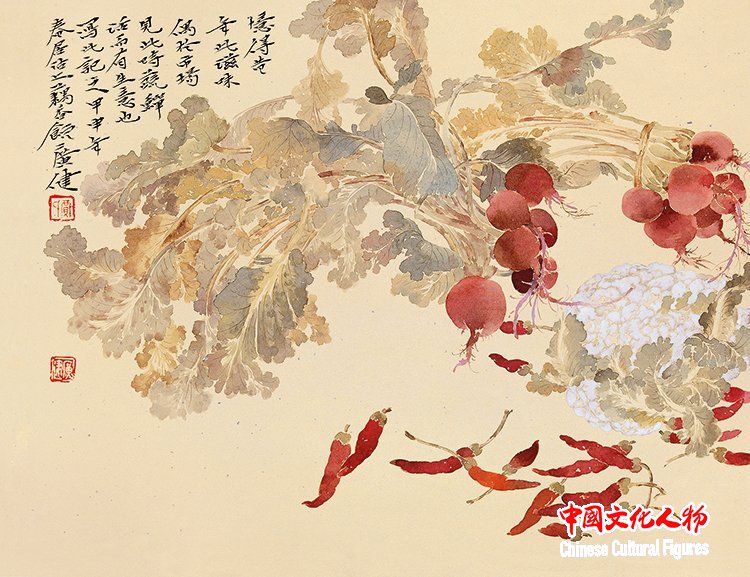
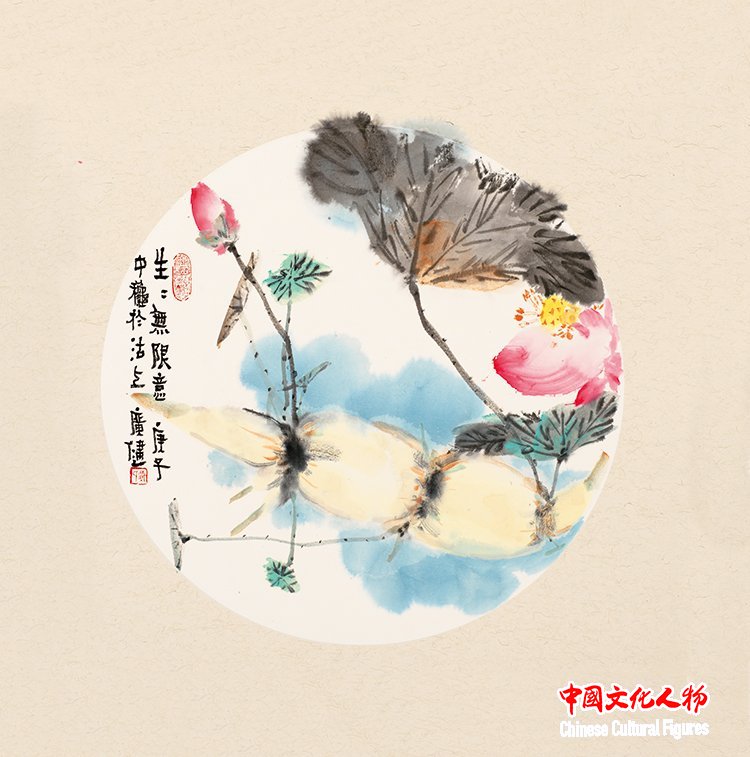
贾广健的花鸟画是以小写意没骨画为主体,他的没骨画虽有恽南田的幽深寂静和清新高逸,但在视觉感受上又比恽南田更加写实和生动。因为今天的画家都经历过专业院校的造型和色彩训练,具有扎实的对景写生功力。所以,在贾广健笔下的花和鸟,尤其是在表现花头、花茎和花叶之间的关系上更加贴合实际,而且这种鲜活感绝不是来自于画家个人编造的笔墨趣味,而是画家长期以来对充满生机的自然形态的一种体会和感触。
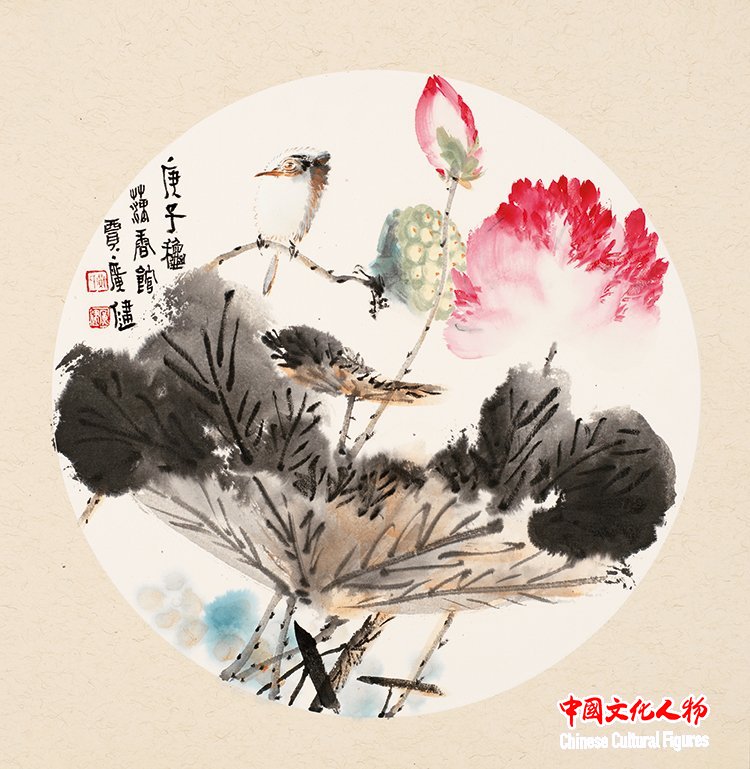
实际上,贾广健非常善于表现花的种种细节,在某种意义上讲,他的作品之所以充溢着饱满的意象正是因为细节的生动刻画。因此,我设想贾广健可能会经常或者至少在他的青年时代对花的自然生态做出过细致的研究,所以他才有能力将花朵、花茎到花枝之间的关系处理得如此微妙和精彩。再者,贾广健在花卉的表现方法上,特别强调虚实的变化。如最常见的荷花题材,他多采用色粉的晕染和冲撞方式,在粉的成分和水的成分较多的情况下,将色彩冲撞到花朵的边缘地带,也就是说,贾广健的绘画并不是涂满了红色或黄色,而是用清澈的水去撞击浓厚的色粉,使得荷花的明暗和冷暖变化更具有一种淡雅的美感。
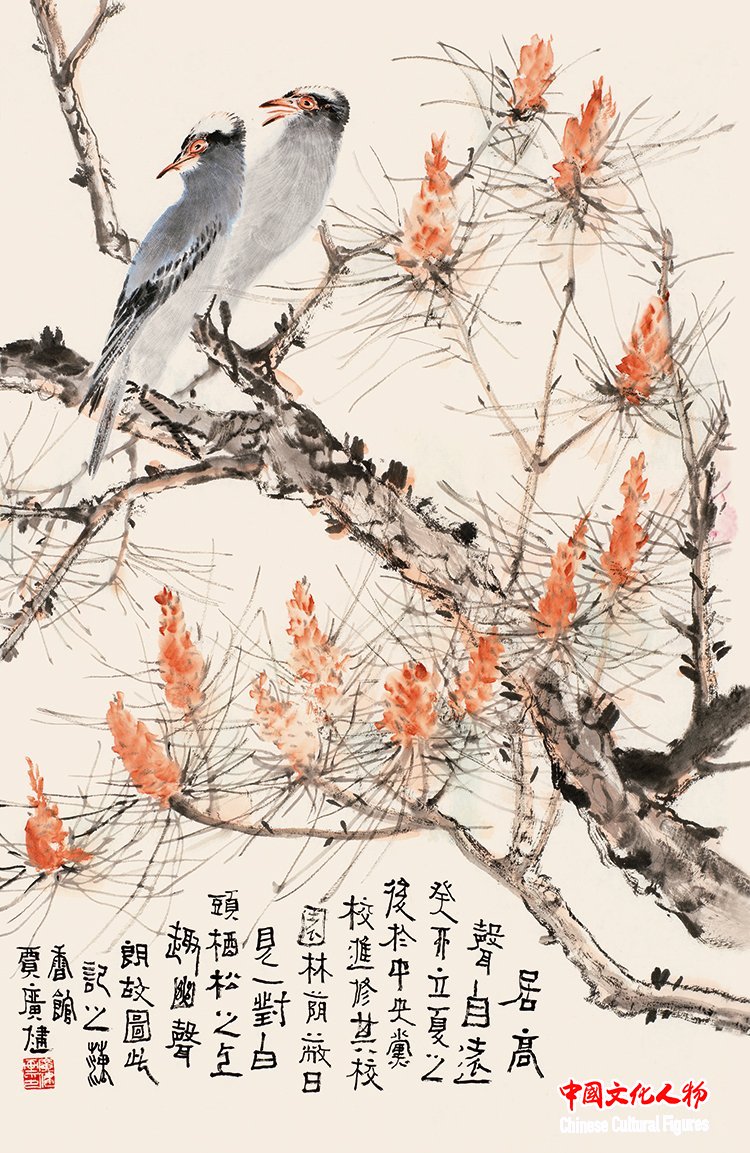
花瓣与叶梗之间的叠加结构是最能体现花科种类的特征,也就是说,在普通人看来,更多在意的是诸如牡丹、桂花、菊花等各种花卉在叶瓣形状上的不同,而关于花瓣与叶梗之间应是如何叠合,却少有人去关注。所以,我认为贾广健在表现自然花卉的细节能力方面明显是超越前人的。正因如此,我们看到很多画家笔下的荷花,只是徒有荷花的外形,却缺少一种生命的质感。另外,贾广健很少描绘败落凋零的或是完全绽放的花卉,最喜欢刻画花朵刚刚盛开的瞬间姿容,如同美丽的年轻少女,这表明他是希望借助花卉的容貌来体现人性的美感。贾广健作品中的禽鸟也非常出色,尽管他的画面中很少出现禽鸟,但也不同于一般画家仅仅把鸟当作绘画符号,仍然是用心绘画、细致入微,趣味感也非常丰富。虽然画面的勾染不是十分厚重,却能够显现出鸟的精神和风采,这是贾广健花鸟的重要特色。
贾广健在没骨花鸟画中还借用了水彩画中的透明画法,包括不同色彩之间的叠加技巧。这些技巧更多是在没骨里面能够体现用笔的特点,花瓣、花叶与花茎之间,如何在体现形的同时体现笔意,或者是在用笔的同时体现花草的外形。实际上,花鸟画的最大难度在于既能表现出对象的形象特征,又能通过传统的笔墨体现出物象的意趣,从这方面来看贾广健做的非常出色。
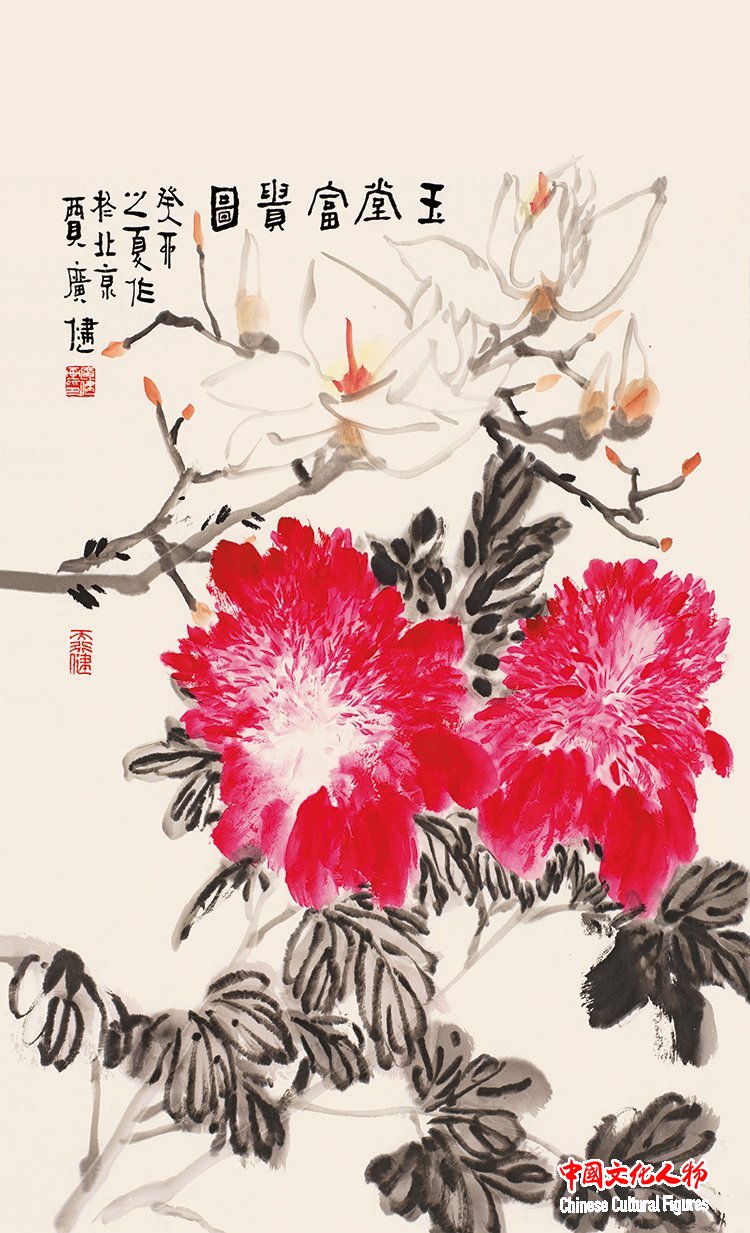
贾广健在画面中追求的饱满感也是一般画家所不具备的。传统的花鸟画多是淡雅清秀的折枝花鸟,是一种在极简的笔触中感受花鸟画的趣味。而贾广健喜欢在画面中制造出很多繁复紧密的图示效果,即使荷花、叶片以及花和叶之间的位置与实际不符,甚至同时加入了两三种不同的花卉来充实满构图,也会在贾广健淡雅笔意的转化中给人以空灵、疏淡的感受。
尚辉(中国美术家协会美术理论委员会主任、《美术》杂志社社长兼主编)
自在水云乡:品读贾广健的“没骨莲花”系列(节选)
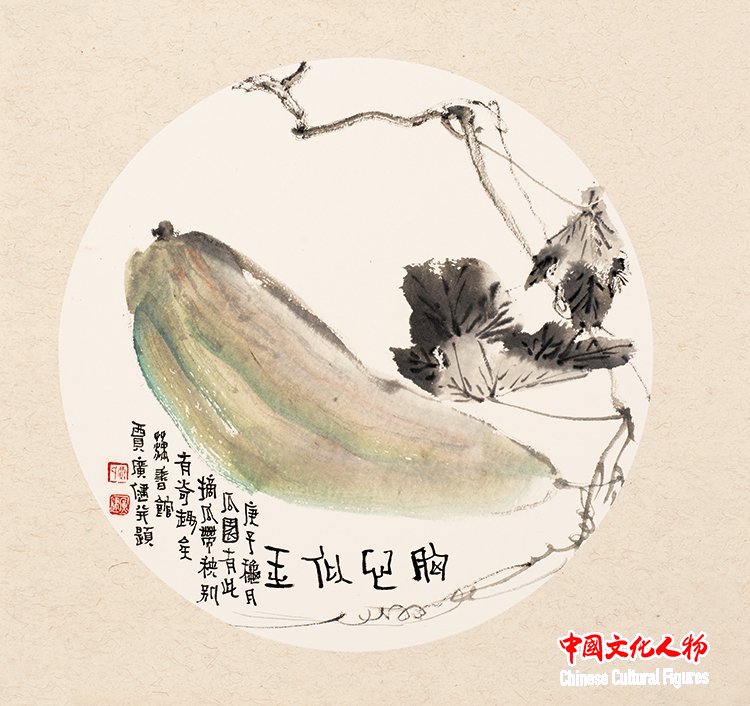
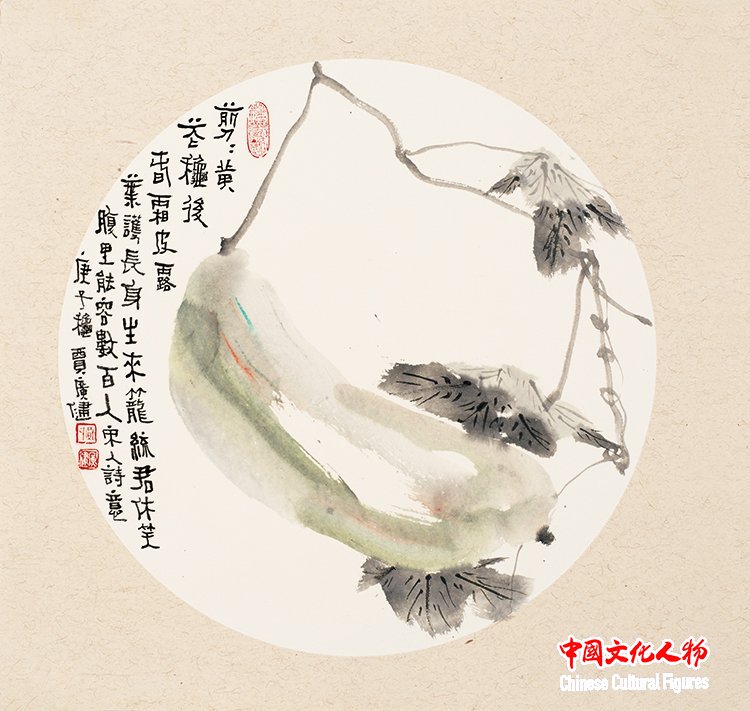
我们今天欣赏贾广建的花鸟画,首先可能要感叹的是他对于物象形体的精准把握。他笔下的蔬果,笔墨的皴擦都是顺着物象的形体结构来画,不仅巧妙地运用了写实技法,而且体现了笔墨的情趣,有些作品尽管画得非常简单,但栩栩如生的自然之美总是能打动你的心灵。他在作品中甚至通过强调光来凸显物像的体积感和分量感,这是古代绘画中不会出现的绘画语言。
贾广健在绘画意识上实现了中西主体的转化,以“中学为体,西学为用”。他的花鸟画以中国画传统的审美意境入画,与此同时,他选择了中国传统绘画中没骨花鸟作为一种重要的表现语言,并有意识地把写实技法与之结合起来,成功开启了花鸟画的崭新面貌。
欣赏贾广健的荷花,不能不说一下中国传统文化中特有的“比德”文化。正是“比德”文化架通了中国画中人与自然万物的联系,中国画家尤其钟爱梅、兰、竹、菊等“君子”题材,就是“比德”文化影响下的结果。“比德”使得许多题材演化成为人格的象征,画家们描绘这些题材不再是表现物象的外在形态,而是为了表达自己对物象指向的人格化涵义的追求。正是从这个层面上,中国人得出了人品与画品相通的概念“人品即画品。花鸟画家在描绘自然万物的形象时,由于每个人的修养不同,其作品的深层涵义也就不同,换句话说,就是个人修养的高低都会在作品中显现出来,李苦禅先生甚至认为“人无品格,下笔无方”。
荷花在中国传统文化中有着特殊的含义,“荷”的寓意与中庸之道的主要内涵“中和”相关,而且荷花具有“出淤泥而不染,濯清涟而不妖”的君子品质。因此,贾广健有意识地选择并反复绘画荷花题材,一方面是受到了中国传统文化的至深影响,另一方面是他在荷花题材中寄托了自己的理想和愿望。正如他在没骨莲花作品的题字“自在水云乡”,体现了一种自在从容的创作状态。同时,“自在水云乡”的美学境界也是贾广健对生活境界的一种表述和向往。因此,通过贾广健的没骨莲花作品,我们能够感受到一位当代专业单位的画家内心中流淌的诗书画意以及充溢在骨髓中的文人情节。
王平 (中国美术家协会分党组成员、秘书长)
贾广健
1964年生于河北永清,1994毕业于天津美术学院。
中国美术家协会副主席,中国国家画院研究员、花鸟画研究所名誉所长,中国传媒大学中国画研究院副院长,中国美协中国画艺委会副主任,中国工笔画学会副会长。二级教授,博士生导师。曾任天津美术学院院长、教授,天津画院院长。
在艺术创作、高等美术教育及学术研究等多方面均有卓越建树。艺术创作风格独特,以工笔花鸟著称,写意作品别具韵味,工写结合,形神兼备,巧妙融合传统与现代,对中国画传统进行转化创新。多次参加全国美展等国家级大型展览并获奖,30余种个人专著、专集。
Chinese Cultural Figures (Chief Editor: Wang Baosheng) Jia Guangjian is a renowned contemporary flower-and-bird painter and a key figure in the Beijing-Tianjin School. I mention this artistic movement because during the Republican era, Beijing and Tianjin developed a group of flower-and-bird painters who primarily inherited traditional styles. These traditions were remarkably preserved and evolved within Tianjin's local art community, particularly at the present-day Tianjin Academy of Fine Arts. Early pioneers such as Sun Qifeng and Huo Chunyang sought to blend the artistic essence of Qingteng Baiyang and Bada Shanren's legacy with modern sensibilities. Jia Guangjian emerged as a trailblazing figure who transcended this cultural lineage, forging his own artistic path.
Jia Guangjian's flower-and-bird paintings primarily feature small-scale, freehand mogu brushwork. While his mogu paintings carry the serene tranquility and refined elegance of Yun Nantian's works, they achieve a more vivid realism in visual perception. This is because contemporary artists, having undergone rigorous training in form and color at professional art academies, possess solid skills in on-site sketching. Consequently, the flowers and birds in Jia's compositions, particularly those depicting the relationships between blossoms, stems, and leaves, more accurately reflect natural reality. This vividness does not stem from the artist's arbitrary brushwork, but rather from his profound understanding of and emotional connection to nature's dynamic vitality, cultivated through years of observation.
In fact, Jia Guangjian's exceptional mastery in capturing floral details is evident. The vivid imagery in his works primarily stems from these meticulous depictions. It is likely that he likely conducted extensive research on floral ecology during his youth, which explains how he achieves such delicate and exquisite relationships between blossoms, stems, and branches. Moreover, his painting technique emphasizes the dynamic contrast between solid and void. When depicting lotus flowers, for instance, he employs a technique of color powder blending and collision technique. Using a high proportion of water-based pigments allows him to create vibrant edges that interact with the flowers' surfaces. Instead of overwhelming the composition with saturated reds or yellows, Jia uses clear water to interact with rich pigments, resulting in subtle variations of light and shadow that evoke a refined aesthetic.
The layered structure of petals and petioles best embodies the characteristics of flowering species. While most people focus on the unique leaf shapes of flowers like peonies, osmanthus, and chrysanthemums, few pay attention to how petals interlock with stems. This is why Jia Guangjian's ability to depict floral details surpasses that of his predecessors. Many painters merely replicate the form of lotuses without capturing their vital texture. Moreover, Jia rarely portrays withered or fully bloomed flowers. He prefers to capture them at their most delicate, when they are in full bloom, like a beautiful young maiden. This shows his intention to express human beauty through floral aesthetics. His bird paintings are equally remarkable. Though birds seldom appear in his compositions, they transcend mere decorative elements. Each bird is meticulously rendered with rich artistic charm. Despite the light brushwork, the birds' spirit and elegance emerge vividly—a hallmark of Jia Guangjian's distinctive flower-and-bird artistry.
In his mogu flower-and-bird paintings, Jia Guangjian incorporates transparent watercolor techniques, including layering colors. These methods highlight brushwork characteristics within the mogu style, demonstrating how petals, leaves, and stems can be rendered with both form and artistic intent – or how brushstrokes simultaneously capture the contours of plants. The greatest challenge in flower-and-bird painting lies in capturing the physical features of the subjects while conveying their artistic essence through traditional ink techniques. In this regard, Jia Guangjian has achieved remarkable excellence.
Jia Guangjian's pursuit of fullness in his paintings transcends the conventional approaches of most artists. While traditional flower-and-bird paintings typically feature delicate and refined branch arrangements that convey artistic charm through minimalist brushwork, Jia Guangjian deliberately creates intricate visual compositions. Even when he depicts lotus flowers, leaves, or floral arrangements that deviate from natural proportions, or incorporate two or three types of blossoms to fill the composition, his elegant brushstrokes transform these elements into ethereal and understated beauty through subtle transformations.
Shang Hui (Director of the Art Theory Committee of China Artists Association, President and editor-in-chief of Fine Arts Magazine)
Free Water and Cloud Village: Reading Jia Guangjian’s “Mogu Lotus” Series (Excerpt)
When viewing Jia Guangjian’s floral and avian paintings, one is likely impressed first by his precise grasp of form. The fruits and vegetables in his works are rendered with meticulous brushwork that follows the natural structure of the subjects. While employing realistic techniques, he imbues his ink and brushwork with poetic charm. Even in minimalist compositions, the beauty of nature touches the heart. He further emphasizes light to highlight the volumetric depth and weight of forms, a painterly technique rarely seen in classical Chinese art.
Jia Guangjian achieved a transformation of Chinese and Western artistic consciousness in his painting philosophy by adhering to the principle of “Chinese learning as the essence and Western learning as the application.” His flower-and-bird paintings incorporate the aesthetic ambiance of traditional Chinese paintings. He also adopted the mogu flower-and-bird technique from traditional Chinese painting as an important means of expression, consciously integrating realistic techniques with it. This successfully ushered in a new era for flower-and-bird painting.
To appreciate Jia Guangjian’s lotus paintings, one must understand the unique “virtue comparison” culture of traditional Chinese art. This culture is what bridges the connection between humans and nature in Chinese painting. Chinese painters particularly favor themes of “gentlemen,” such as plum blossoms, orchids, bamboo, and chrysanthemums. This preference is a result of the influence of “virtue comparison” culture. This cultural concept has turned many subjects into symbols of personal character. When depicting these themes, painters no longer focus on the external forms of objects, but rather on expressing the implied personification of the subjects. From this perspective, the Chinese people have derived the concept that “personal integrity is a painting quality.” The works of flower-and-bird painters carry different profound meanings depending on the artist’s level of cultivation. In other words, one’s moral character manifests in their creations. Master Li Kuchan even believed that “without character, one cannot paint properly.” Lotus flowers hold special significance in traditional Chinese culture. The symbolism of “lotus” aligns with the core principle of the Doctrine of the Mean— “harmony” —and embodies the noble qualities of “rising from mud yet remaining unstained, washed in clear ripples yet retaining natural grace.” Therefore, Jia Guangjian consciously chose to repeatedly paint lotus motifs, partly due to the profound influence of traditional Chinese culture, and partly to express his ideals and aspirations through this subject. As seen in the inscription “In the Free Realm of Water and Clouds” on his mogu lotus works, which reflects a state of effortless creation, the aesthetic realm of “In the Free Realm of Water and Clouds” also serves as Jia Guangjian’s expression and aspiration for life’s essence. Therefore, through Jia Guangjian’s mogu lotus works, we can feel the poetry and calligraphy flowing in the heart of a contemporary professional painter and the literati sentiment overflowing in his bones.
Wang Ping (Member of the Party Leadership Group and Secretary-General of China Artists Association)
Jia Guangjian
He was born in Yongqing, Hebei Province, in 1964 and graduated from Tianjin Academy of Fine Arts in 1994.
He is Vice Chairman of the China Artists Association, Researcher of the China National Academy of Painting, Honorary Director of the Flower-and-Bird Painting Research Institute (of the China National Academy of Painting), Vice Dean of the Traditional Chinese Painting Research Institute of Communication University of China, Deputy Director of the Traditional Chinese Painting Art Committee of the China Artists Association, and Vice President of the China Fine Brushwork Painting Society. He is also a Second-level Professor and Doctoral Supervisor. He once served as President and Professor of Tianjin Academy of Fine Arts, and President of Tianjin Academy of Painting.
He has made outstanding contributions across multiple fields, including artistic creation, higher art education, and academic research. His unique artistic style is renowned for its meticulous bird-and-flower paintings, and his freehand brushwork creations showcase a distinctive charm through the harmonious integration of detailed and expressive techniques, that achieve both form and spirit. By skillfully blending tradition with modernity, he has innovatively transformed traditional Chinese painting. His works have been exhibited in numerous national-level exhibitions, including the National Art Exhibition, where they have won awards. He has authored over 30 monographs and specialized collections.
 文化大家
文化大家









 京公网安备11010802046836号